
Conditions treated
Traumatic lumbar spine fractures and dislocations.
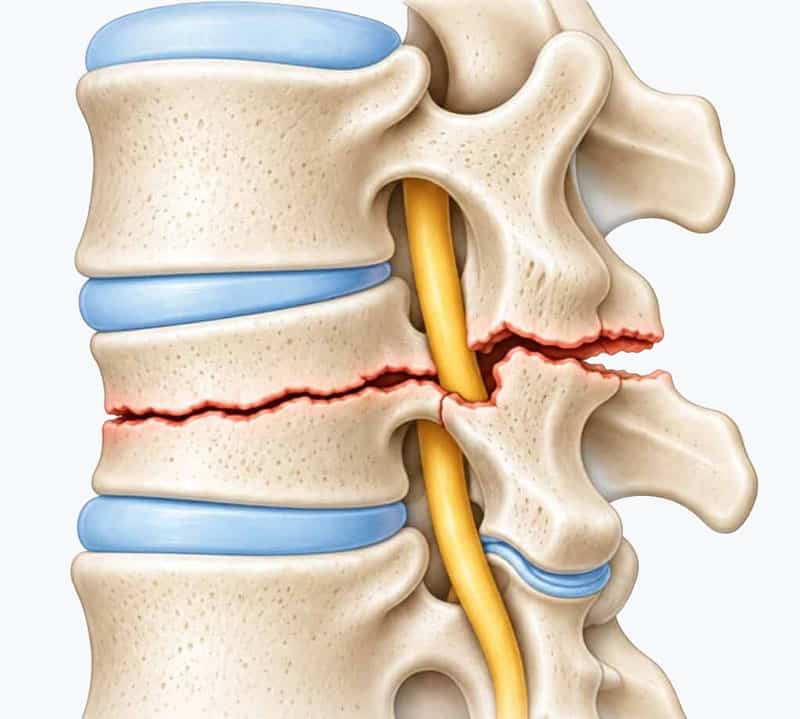
Trauma from a fall, car crash or sports collision may injure your lower back in various ways. It can damage your spinal cord and vertebrae, disrupt your discs and ligaments and, in severe cases, affect your nerves too.
Anatomy
About your lumbar spine.
Your lumbar spine (lower back) is the bottom segment of your spine, involving 5 vertebrae known as L1-L5. Vertebrae are like hollow bony building blocks, and sandwiched between each one is a disc that cushions shock and provides flexibility.
The spinal cord is a tight bundle of nerves that runs from your brain stem down through your spinal column, stopping at your L1 vertebra where it turns into a different nerve structure known as the cauda equina. A pair of nerve roots branch off from each vertebral segment. The nerves in your lumbar spine help you move your lower body.
Causes and symptoms
What causes a lumbar fracture?
High-energy trauma
Spinal fractures can happen through high-energy traumas such as a car crash or a throw from a horse.
Weakened bone
If your spine is weakened by osteoporosis, a smaller event like a fall may be traumatic enough to cause a spinal fracture.
Symptoms
Moderate to severe back pain that gets worse when you move. If the fracture has affected your spinal cord or nerves, you may also experience bowel or bladder dysfunction along with numbness, tingling or weakness in your legs.
Assessment
Why doctors examine your spine carefully.
If you have sustained other injuries, have lost consciousness or are in shock, you may be so distracted by those symptoms that you do not notice your back pain. That is why your doctors will always thoroughly examine your spine if you have been in a car crash or experienced a similarly high-energy event.
They will also pay very close attention to which particular L1-L5 vertebra is injured and whether that has caused knock-on damage to your spinal cord and nerves. If you have an L2 lumbar fracture or lower, you will not have a spinal cord injury as the cord stops at L1 — however it is still possible to injure the nerves in your lower spine.
Treatment
Treatment for lumbar fractures.
Treatment depends on the location and severity of your injury, particularly whether or not your nerves are involved. Not all fractures require surgery and many times a full recovery can be expected if there is no nerve injury.
First aid
After an injury to the spine, the first concern is to protect your nerve structures. That is done by minimising any movement of your spine until we are able to assess its stability through careful examination and investigation.
Investigations
X-rays and CT scans are very good at assessing the alignment and integrity of the bones. CT can exclude instability in 98% of cases. Where there is concern about the nerves, discs and ligaments, an MRI adds essential detail.
If your spine is unstable
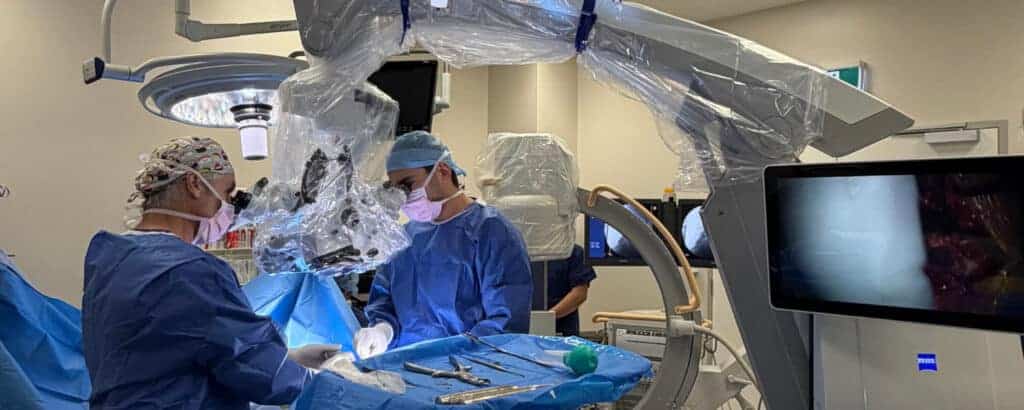
A surgeon trained in assessing the spine will decide if surgery is warranted. In some cases a brace can help stabilise the spine while it heals, or a period of bed rest may be prescribed. In severe cases surgery is recommended to avoid complications associated with prolonged bed rest and immobility.
Nerve injury
Nerve injuries relating to a lumbar fracture.
Thankfully, injuries in the lumbar spine rarely threaten the spinal cord as it terminates at the L1 level. The nerves in your lumbar spine are mostly found in the cauda equina, a leash of nerves shaped a bit like a horse tail, made up of the lumbar and sacral nerve roots. It supplies the legs and controls bladder and bowel outlets.
Nerve injury can have differing degrees of impact on the cauda equina depending on which vertebrae are fractured. Generally speaking, the higher the injury is in your lumbar spine, the greater the neurological deficit.
A nerve injury at L1 or L2 usually means you can still walk, with or without aids. If the nerve injury is above L3, then many of the important muscles controlling the legs are too weak to allow independent walking.
Living with a fracture
Recovery and everyday advice.
How to sit with a fractured vertebra
Your aim is to reduce the pressure on your spine to help it heal. Whether lying down, standing or sitting, keep a good posture that holds your spine in a neutral position. A high-backed chair like a dining chair makes this easier than slumping into a soft sofa — one with arms is even better, as you can push yourself up with them.
Recovery from injury and surgery
Surgery aims to reduce the impact of your injury and maximise your long term function. It is only one part of your treatment — recovery and rehabilitation can be a lengthy process, and you may need ongoing treatment and support for over a year.
Living with back, neck or joint pain?
Dr David Edis and the team at Victorian Orthopaedic Spine Service will assess your symptoms, explain your diagnosis and recommend the treatment that best suits you.
Get in touch
Contact our rooms.
Our reception team will help you arrange a consultation, answer questions about your referral and let you know what to bring on the day.
Reception hours: Monday to Thursday 9am–4.30pm, Friday 9am–2pm
Response time: within 1–2 business days
Preparing for your appointment →
Referrals
A current GP or specialist referral is required.
Request a consultation
Send us your details and our reception team will be in touch. We aim to reply within 1–2 business days. Fields marked with an asterisk (*) are required.
All information is general in nature. Patients should consider their own personal circumstances and seek a second opinion. Any surgical or invasive procedure carries risks.