
Conditions treated
Degenerative scoliosis.
At Victorian Orthopaedic Spine Service we provide assessment, diagnosis and treatment of degenerative scoliosis. We plan a care pathway for your condition, starting with conservative treatments and only progressing to a surgery recommendation if necessary.
Overview
What is degenerative scoliosis?
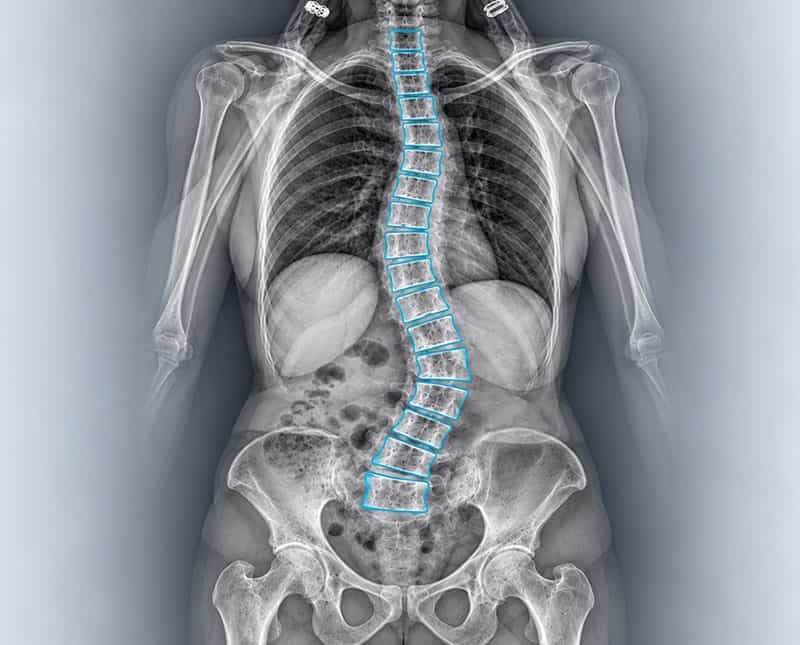
Degenerative scoliosis is a sideways curve in your spine, caused by age-related changes in your spine discs and facet joints.
Your spine is made up of building blocks known as vertebrae, held together by hinges called facet joints. These joints give your spine flexibility, enabling you to move. Sandwiched between each vertebra is a disc, a soft shock-absorbing cushion that stops your bones rubbing against each other.
As you get older, the discs and facet joints may start to show signs of wear and tear. In some people that degeneration triggers scoliosis. When the degeneration is worse on one side, your lower spine may start to curve, forming the tell-tale S-shape of scoliosis.
Symptoms
What are the symptoms?
Many people with mild degenerative scoliosis have no symptoms at all. Symptoms usually develop gradually and may change through the day — often worse when you first get up, easing as you move, and worsening again as the day ends.
Back pain
Often worse when standing and easier when lying down.
Shock-like leg pain
Sharp, shock-like pain in one or both legs, following the path of your sciatic nerve.
Numbness or weakness
Numbness or weakness in your legs. A nerve may be compressed as your spine curves, or if your spinal canal starts to narrow (spinal stenosis).
Causes and risk
What causes degenerative scoliosis?
Degenerative scoliosis is caused by age-related changes in your spine. There is nothing you can do about growing older, but you are at higher risk if you have other conditions that affect your spine.
Degenerative disc disease
Degenerative disc disease and facet joint arthritis can affect the alignment of your vertebrae.
Osteoporosis
Weakened bone changes how your spine carries load and holds its shape.
Previous spine surgery
Earlier surgery can change how load is shared across the remaining segments.
Diagnosis
How is degenerative scoliosis diagnosed?
First, we start by listening to your symptoms and medical history. Then we will examine you, asking you to stand in different positions so we can observe or feel your spine.
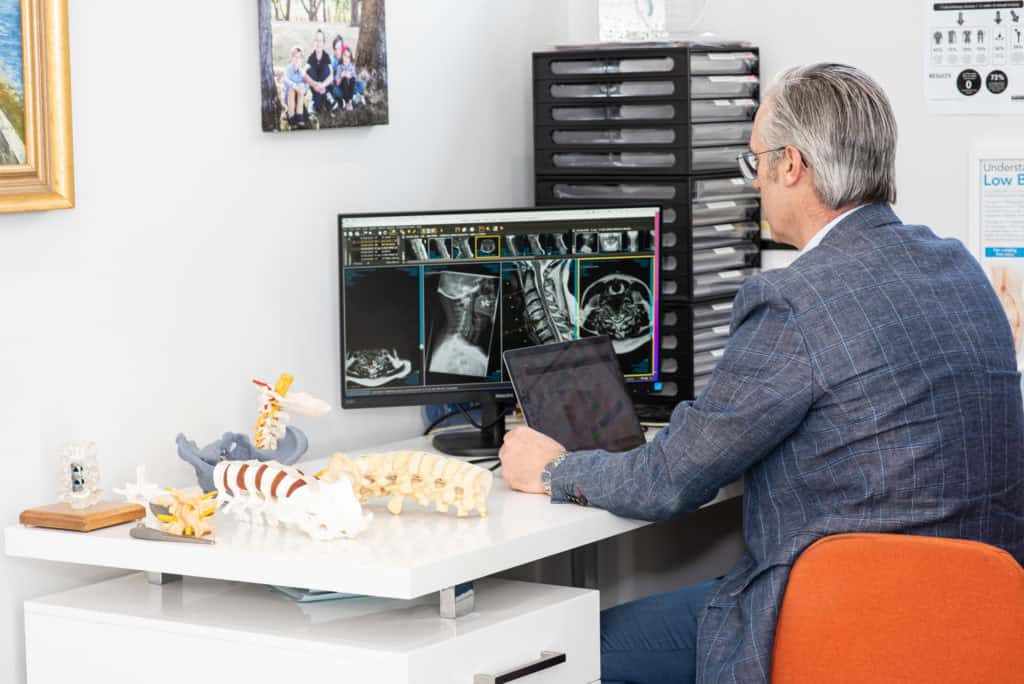
If we think you may have degenerative scoliosis, we will order some images of your spine using a CT scan, an X-ray or an MRI. These images allow us to see your spine and measure its curves. If your spine curves by more than 10 degrees on the Cobb Angle measurement, then we will diagnose degenerative scoliosis.
Treatment
How do you treat degenerative scoliosis?
Treatment depends on the impact it is having on your life. If your symptoms are mild, then we will start with lifestyle modifications and physiotherapy.
If degenerative scoliosis is causing you nerve pain, then we can try:
- Medication to control the pain — being careful about side effects and interactions with other medications you take
- Nerve root or epidural injections
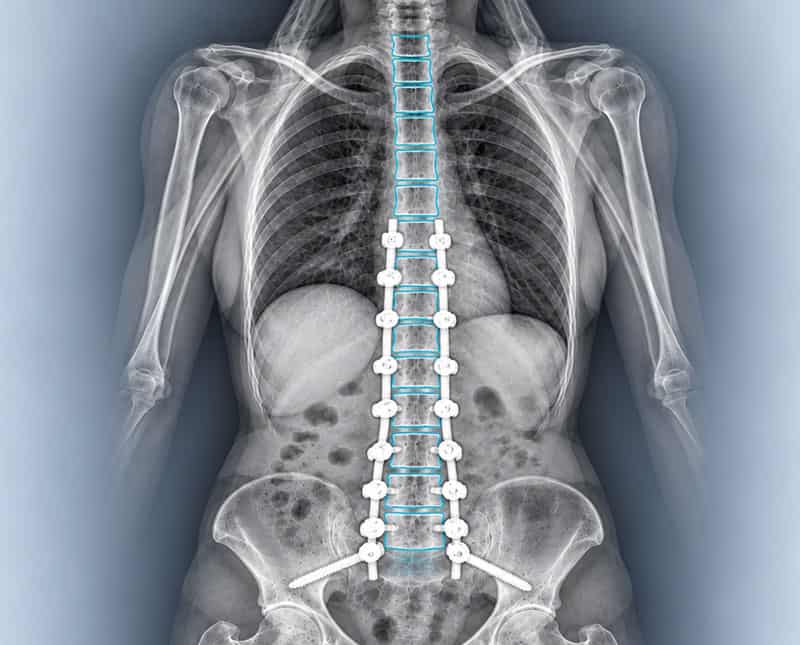
- Surgery to decompress the nerve and stabilise the spine
Because degenerative scoliosis is a wear and tear condition, you are likely to be older when you develop it. You may have other medical conditions or be dealing with increasing frailty, so we have to weigh up the risks and benefits of surgery very carefully. New minimally invasive spinal surgery techniques like OLIF are making surgery easier for older patients to tolerate.
Living with back, neck or joint pain?
Dr David Edis and the team at Victorian Orthopaedic Spine Service will assess your symptoms, explain your diagnosis and recommend the treatment that best suits you.
Get in touch
Contact our rooms.
Our reception team will help you arrange a consultation, answer questions about your referral and let you know what to bring on the day.
Reception hours: Monday to Thursday 9am–4.30pm, Friday 9am–2pm
Response time: within 1–2 business days
Preparing for your appointment →
Referrals
A current GP or specialist referral is required.
Request a consultation
Send us your details and our reception team will be in touch. We aim to reply within 1–2 business days. Fields marked with an asterisk (*) are required.
All information is general in nature. Patients should consider their own personal circumstances and seek a second opinion. Any surgical or invasive procedure carries risks.