Conditions treated
Spondylolisthesis.
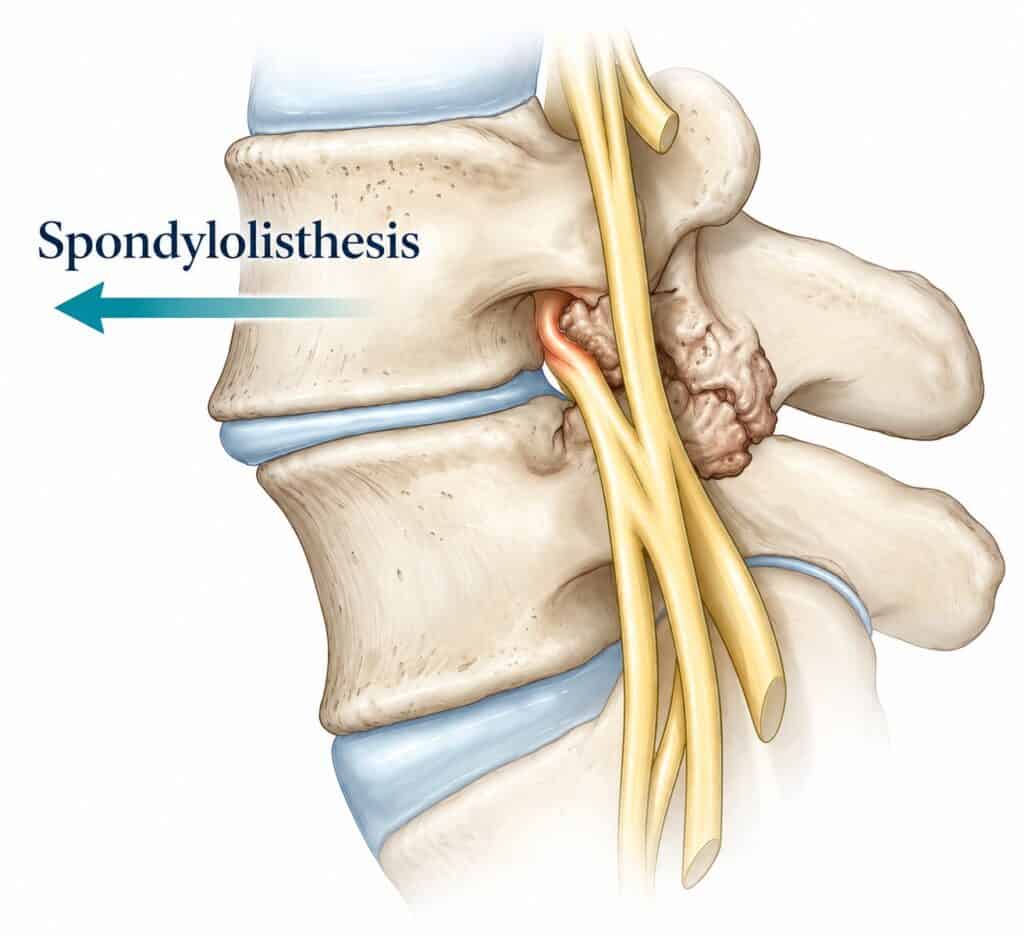
Spondylolisthesis means one of the bones in your spine (a vertebra) has slipped forward or backward out of line with the bone below it. It is most common in the lower lumbar spine at L5-S1 and L4-5.
Overview
What is spondylolisthesis?
Anterolisthesis, or forward translation, is the most likely to cause symptoms due to nerve compression or mechanical back pain. Retrolisthesis, or backward translation, occurs naturally as the disc height reduces with age and does not commonly cause significant symptoms.
There are several different underlying causes, but most cases are either due to a pars defect or severe wearing out of the facet joints. The first type is termed lytic spondylolisthesis and the second type degenerative spondylolisthesis. There are other causes such as acute fractures or congenital bone deformities. It can also occur after surgery when too much bone is removed during a laminectomy.
Type one
Lytic spondylolisthesis.
In this condition there is a defect in the pars interarticularis part of the vertebra. The pars connects the vertebral body to the lower facet joints and lamina, so the vertebral body translates forward and leaves behind the posterior elements.
It is thought to have its origin in childhood or early adolescence when the bone is more vulnerable to recurrent loads and stress on the pars. A stress fracture occurs and does not heal completely, leaving a cartilage bridge that can elongate over time allowing forward slip. The most common risk factor is repetitive extension exercise such as gymnastics and cricket fast bowling.
This does not always lead to symptoms at the time — many cases have no symptoms until later adult life and some are only discovered by accident when an X-ray or CT is done for another reason.
How it progresses
Why the condition becomes a problem.
The disc at the affected level typically undergoes premature degeneration because it takes more load than it would have done if it were connected to the posterior elements. If the disc fails and collapses it can lead to pain, and some affected individuals describe recurrent episodes of mechanical back pain — but this is not universal.
Slip progression in adulthood is not common. The usual reason the condition becomes a problem is that the exiting nerve root at that level gets compressed from disc herniation into the foramen, leading to pain down the leg felt as sciatica. This is a special form of spinal stenosis.
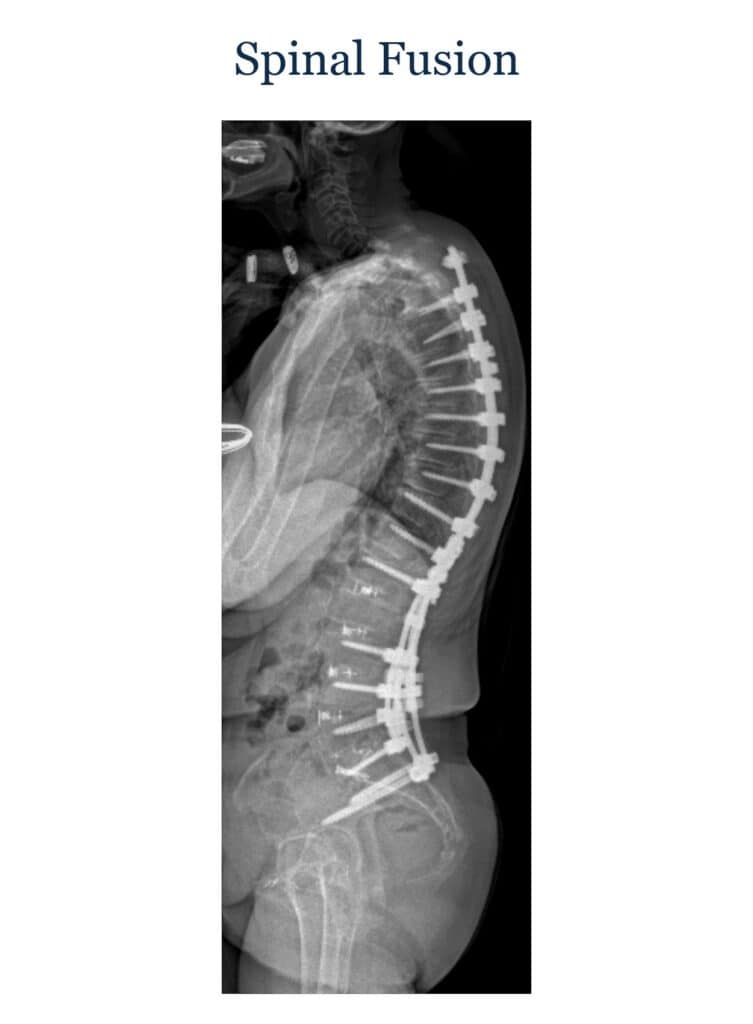
The natural history is variable and for most patients symptoms do settle with conservative management, but once nerve compression pain begins it may not resolve. This is the most common reason for the condition coming to surgical treatment. Surgical treatment typically involves both decompression of the nerve and stabilisation of the affected segment by fusion.
Type two
Degenerative spondylolisthesis.
In this condition the underlying problem is facet joint arthritis. The listhesis occurs as the joint wears out and erodes the underlying bone. The disc is also degenerating and often has lost its normal hydration and height.
Spinal stenosis develops and is made worse by the presence of the listhesis, which further reduces the space for the nerves.
Some people have a predisposition to this condition because of the orientation of their facet joints in a sagittal plane, and the condition is far more common in women.
Treatment is along the lines of that for spinal stenosis, but once surgery is considered then fusion is often required to stabilise the involved segment in addition to decompression.
Living with back or leg pain?
Dr David Edis and the team at Victorian Orthopaedic Spine Service will assess your symptoms, explain your diagnosis and recommend the treatment that best suits you.
Get in touch
Contact our rooms.
Our reception team will help you arrange a consultation, answer questions about your referral and let you know what to bring on the day.
Reception hours: Monday to Thursday 9am–4.30pm, Friday 9am–2pm
Response time: within 1–2 business days
Preparing for your appointment →
Referrals
A current GP or specialist referral is required.
Request a consultation
Send us your details and our reception team will be in touch. We aim to reply within 1–2 business days. Fields marked with an asterisk (*) are required.
All information is general in nature. Patients should consider their own personal circumstances and seek a second opinion. Any surgical or invasive procedure carries risks.