
Conditions treated
Spine tumours.
Tumours of the spine can arise from local tissues (primary tumours) or from tumours that have spread to the spine (metastatic tumours). Another common form found in the spine are the blood cell tumours, including multiple myeloma, lymphoma and leukaemia.
Classification
Is my spinal tumour benign or malignant?
Benign
If a tumour does not have the ability to spread outside the tissue in which it arises, it is benign.
Malignant
If the tumour is aggressive and has the potential to spread to other areas, or has already spread (metastasised), then it is malignant.
Primary tumours
Tumours arising in the spine itself.
Any cell type can form tumours. In the spine the most common tumours arise from the bone, cartilage or nerve tissue, or nerve lining cells.
Haemangioma is a benign tumour arising from blood vessels in the bone. It is very common — around 5% of the population — and is not commonly a cause of symptoms unless very large, in which case it can weaken the bone and lead to fracture.
Other primary tumours found in the spine include:
- Schwannoma
- Osteoid osteoma
- Osteochondroma
- Meningioma
- Osteosarcoma
- Chondrosarcoma
- Chordoma
- Myeloma
- Lymphoma
Metastatic tumours
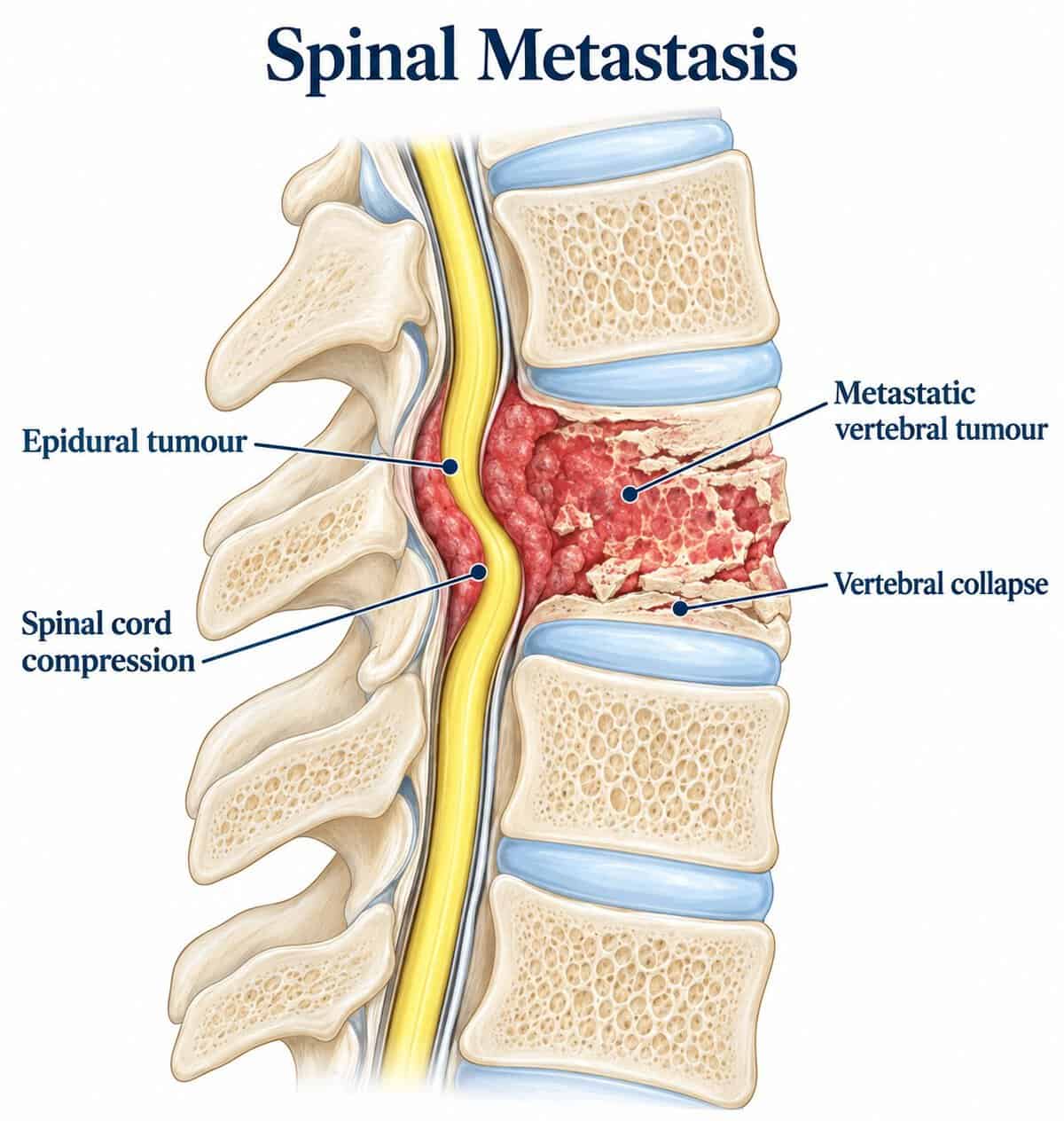
Tumours that have spread to the spine.
These tumours arise elsewhere in the body and have spread to the spine, most commonly via the blood stream. These are the most common tumours to present in the spine.
The common types of tumour to spread to the spine are breast, prostate, bowel, kidney, thyroid, lung and melanoma.
Metastatic tumours in the spine are often painful and can lead to fractures or put pressure on the spinal cord or nerves of the cauda equina.
Treatment
How spine tumours are treated.
Treatment depends on the type of tumour, its location and size, and the extent of spread.
Radiotherapy
Commonly the first line of treatment, unless the stability of the spine is at risk or the tumour is not responsive to radiation.
Surgery
Surgery can have specific roles to decompress the nerves and provide stability where necessary. Sometimes surgery is required for a diagnosis, as tissue samples from a needle biopsy are not always adequate.
Living with back, neck or joint pain?
Dr David Edis and the team at Victorian Orthopaedic Spine Service will assess your symptoms, explain your diagnosis and recommend the treatment that best suits you.
Get in touch
Contact our rooms.
Our reception team will help you arrange a consultation, answer questions about your referral and let you know what to bring on the day.
Reception hours: Monday to Thursday 9am–4.30pm, Friday 9am–2pm
Response time: within 1–2 business days
Preparing for your appointment →
Referrals
A current GP or specialist referral is required.
Request a consultation
Send us your details and our reception team will be in touch. We aim to reply within 1–2 business days. Fields marked with an asterisk (*) are required.
All information is general in nature. Patients should consider their own personal circumstances and seek a second opinion. Any surgical or invasive procedure carries risks.